

Ethiopia and Eritrea between territorial sovereignty, human security and conflict prevention in the Red Sea region

Abstract: The tensions between Ethiopia and Eritrea are examined through an interdisciplinary perspective integrating geopolitics, political science, international law and human security studies, with particular attention to the extent to which Ethiopia’s landlocked status may influence perceptions of strategic vulnerability and contribute to the transformation of economic interests into sources of interstate competition. The Tigray crisis and the deterioration of diplomatic relations between Addis Ababa and Asmara in October 2026 provide the empirical context for a qualitative investigation based on documentary analysis of institutional sources, official statements, academic literature and journalistic reporting. A clear methodological distinction is maintained between verifiable facts, the positions expressed by the parties involved and allegations that have not been independently corroborated. The interpretative framework integrates the geopolitics of maritime access, the security dilemma, the principle of territorial sovereignty and the human dimension of conflict, highlighting how geographical vulnerability does not automatically lead to the use of force but may increase the risk of escalation when combined with declining interstate trust, domestic fragility and inadequate mechanisms for communication and mediation. Particular attention is also devoted to the potential contribution of regional cooperation, multilateral diplomacy and negotiated agreements on port access to establishing a balance capable of reconciling economic autonomy, territorial integrity and the protection of civilians. The analysis identifies the institutional governance of interdependence as a fundamental condition for conflict prevention and long-term stability across the Red Sea region.
Keywords: #HornOfAfrica #Ethiopia #Eritrea #GeographicalVulnerability #Geopolitics #HumanSecurity #TerritorialSovereignty #RedSea #ConflictPrevention #InternationalLaw #RegionalSecurity #CristinaDiSilvio #EthicaSocietas #EthicaSocietasReview #ScientificJournal #Humanities #SocialSciences #EthicaSocietasUPLI
When geography becomes a political variable
Geography constitutes one of the structural conditions within which international relations develop, since territorial location, the availability of resources, access to infrastructure and proximity to strategic trade corridors help define the opportunities and constraints of political action. These factors do not, however, provide a sufficient explanation of state behaviour, which also depends on institutions, perceptions of threats, power relations and the decisions through which governments interpret and respond to geographical conditions.
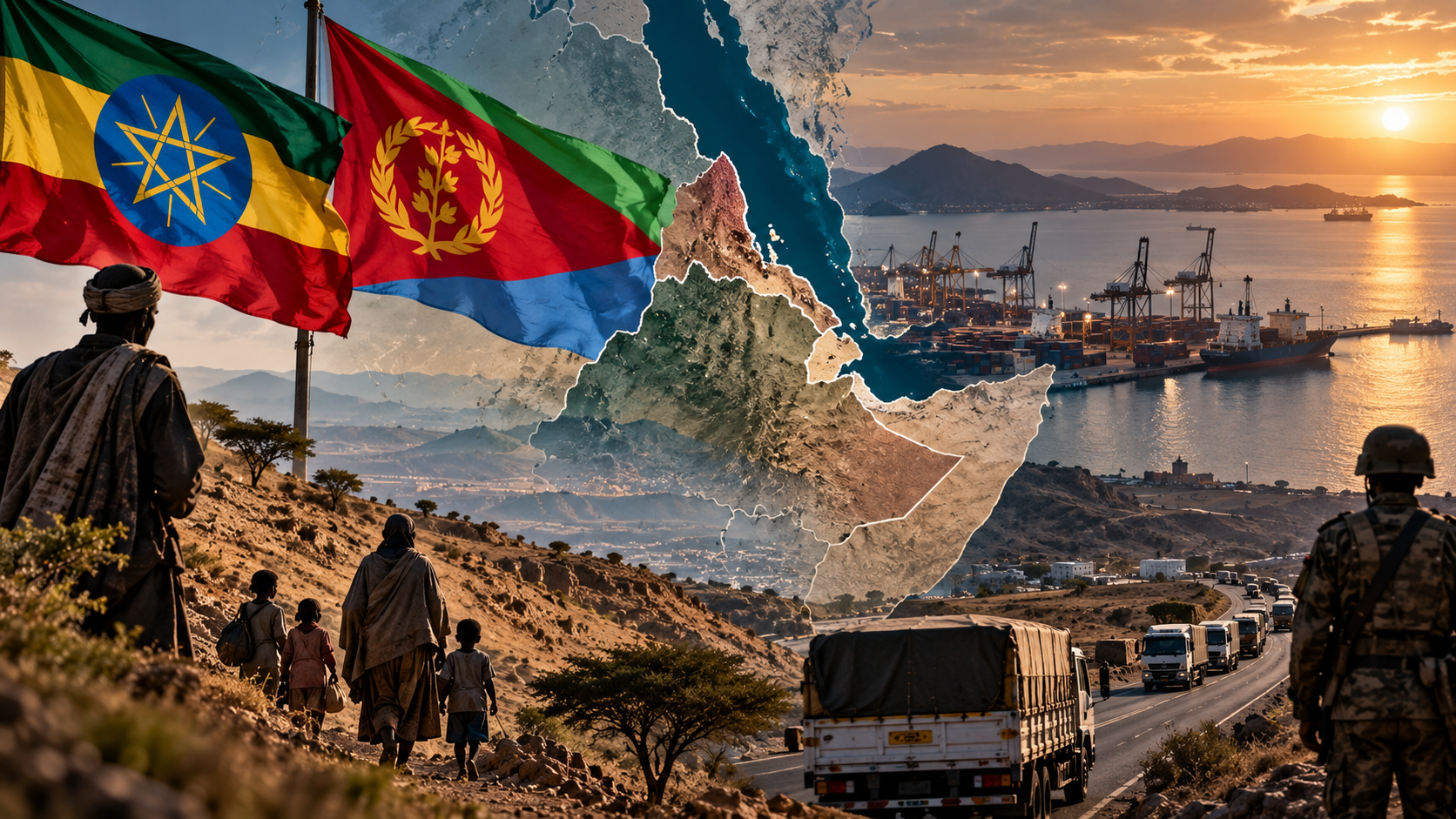
The tensions between Ethiopia and Eritrea provide a particularly significant case for examining this relationship, since Eritrea’s independence in 1993 profoundly altered Ethiopia’s geopolitical position, depriving it of direct access to the sea and making it necessary to rely on port infrastructure located in third countries. For Asmara, meanwhile, possession of a Red Sea coastline represents an essential component of its territorial sovereignty and strategic position.
The divergence between these geographical circumstances does not necessarily imply the existence of conflict, since access to ports can be regulated through commercial agreements, concessions, infrastructure investment and bilateral cooperation. Competition becomes more problematic, however, when an economic requirement is interpreted as a strategic claim incompatible with the neighbouring state’s security interests, transforming a potentially negotiable issue into a source of political confrontation.
In October 2026, the deterioration of diplomatic relations between Addis Ababa and Asmara, accompanied by renewed fighting in several northern regions of Ethiopia, brought this contradiction back to the forefront. On 1 October, the Ethiopian government announced the closure of its embassy in Eritrea and declared ten Eritrean diplomats personae non gratae, while Asmara responded by severing diplomatic relations with its neighbour. These decisions occurred against a backdrop of Ethiopian allegations that Eritrea, Sudan and Egypt were supporting an opposition alliance led by the Tigray People’s Liberation Front, allegations rejected by the governments concerned.
On 9 October 2026, in a statement published the following day, the United Nations Secretary-General expressed grave concern over renewed fighting in Ethiopia’s Tigray, Afar and Amhara regions, calling on the parties to cease hostilities and resume dialogue within the framework of the 2022 Pretoria Agreement, while also expressing concern over reports of Eritrean forces operating on Ethiopian territory. The wording adopted by the United Nations is particularly significant from a methodological perspective, since it distinguishes the documented resumption of hostilities from reports concerning Eritrean military involvement, which require further verification.
These developments must be interpreted without automatically equating government statements with independently established accounts of events. Although the existence of a diplomatic crisis and renewed hostilities is documented, responsibility for individual military incidents, the strategic intentions attributed to the actors involved and the actual extent of certain operations require specific investigation.
The scientific challenge is therefore not to predict war mechanically, but to identify the conditions under which structural vulnerability may become a source of instability, examining the mechanisms linking geographical dependence on maritime access to interstate escalation and the institutional instruments capable of reducing this risk without compromising territorial sovereignty or the security of civilian populations.
The interpretative hypothesis advanced here is that geographical vulnerability produces destabilising effects primarily when it interacts with three conditions: the perception of an existential threat, weak mechanisms of mutual trust and the overlap between internal conflicts and interstate rivalries.
Theoretical framework of geographical vulnerability and regional security
Geography as a structure of opportunities and constraints
Geopolitical studies have frequently attributed considerable importance to geographical location in the distribution of power and the definition of national interests. However, a deterministic interpretation of geography risks confusing material constraints with the political choices made within those constraints, overlooking the capacity of institutions and diplomatic relations to modify the effects of territorial conditions.
Landlocked status generally entails additional logistical costs, dependence on the transit infrastructure of other countries and greater exposure to disruptions in trade connections. Nevertheless, these consequences are not uniform and depend on the quality of transport networks, international agreements, the stability of neighbouring countries and the institutional capacity to diversify routes.
Geographical vulnerability may therefore be defined as a condition of structural exposure in which the functioning of economic and strategic activities depends on infrastructure, territories or political decisions not fully controlled by the state concerned. Such vulnerability does not necessarily amount to overall weakness, since a state may possess considerable demographic, economic and military resources while simultaneously remaining vulnerable in relation to a particular strategic function.
In Ethiopia’s case, the country’s demographic and economic significance does not eliminate its dependence on corridors providing access to international markets. Yet this condition does not independently determine its political response. It may encourage cooperation, commercial diversification and the pursuit of institutional agreements or, under particular circumstances, be interpreted as a limitation on national autonomy and become the object of a strategy aimed at enhancing state power.
The security dilemma
The concept of the security dilemma, developed by John H. Herz and subsequently explored by Robert Jervis, helps explain how measures adopted by one state to strengthen its security may be perceived as threats by another, triggering a sequence of reactions through which initiatives initially regarded as defensive contribute to increasing insecurity throughout the international system.
Applied to relations between Ethiopia and Eritrea, this approach makes it possible to distinguish Ethiopia’s interest in securing reliable maritime connections from Eritrea’s perception that certain initiatives concerning access to the sea could affect its sovereignty or territorial security. It also demonstrates that initially offensive intentions are not necessary for escalation to occur, particularly when actors interpret each other’s initiatives as threatening and respond with measures that reinforce mutual distrust.
This mechanism may be aggravated by the absence of direct communication, the lack of independent verification and the use of national security rhetoric to portray as existential disputes that could otherwise be addressed through economic or diplomatic instruments.
The security dilemma must not, however, be treated as an interpretative category applicable indiscriminately to every conflict. Its scientific relevance lies in its capacity to identify a plausible mechanism of escalation that can be assessed against available evidence, without presupposing equal responsibility among actors whose conduct may differ in intention, intensity and consequences.
Territorial sovereignty and the limits of strategic action
International law establishes a fundamental limit on the transformation of strategic requirements into coercive claims. Article 2(4) of the Charter of the United Nations prohibits the threat or use of force against the territorial integrity or political independence of any state, while the principles of sovereign equality and the peaceful settlement of disputes constitute further essential foundations of the international legal order.
A state’s interest in improving access to international markets does not, in itself, establish a legal entitlement to acquire territory belonging to another state. Equally, ownership of port infrastructure does not preclude the possibility of granting commercial access through freely negotiated agreements.
It is therefore necessary to distinguish the economic requirement for access to the sea, the contractual and diplomatic arrangements through which that requirement may be satisfied, and any recourse to coercive instruments intended to alter existing conditions. This distinction avoids portraying Ethiopian economic autonomy and Eritrean territorial sovereignty as necessarily incompatible interests.
The political challenge instead consists of developing solutions capable of meeting legitimate logistical requirements without calling into question the territorial integrity of the states concerned, through a system of guarantees that makes agreements predictable and reduces the risk of infrastructure becoming an instrument of political pressure.
Human security and conflict prevention
The human security perspective extends analysis beyond the protection of the state and its infrastructure, placing individuals’ actual living conditions at the centre of consideration. It draws on the understanding of security developed by the United Nations Development Programme in its 1994 Human Development Report, based on reducing fear, deprivation and threats to the essential conditions of life.
In the Horn of Africa, this perspective requires consideration of the consequences of strategic rivalries for civilians, healthcare services, communications, the availability of essential goods and the continuity of economic activities. Deteriorating material conditions may generate further instability, weaken institutional legitimacy and aggravate tensions between local communities and central authorities.
Human security is therefore not an ancillary dimension of geopolitics, but an essential criterion for assessing the sustainability of strategies adopted by states. The effectiveness of regional policies must consequently be evaluated not only in terms of increased negotiating or military capabilities, but also according to their actual capacity to reduce risks to populations and preserve the conditions necessary for lasting peace.
Methodology and scope of the analysis
The study adopts a qualitative approach based on documentary analysis and an interpretative reconstruction of the Ethiopian–Eritrean case, drawing on United Nations documents, international legal instruments, scholarly studies of geopolitics and international relations, and journalistic sources used to reconstruct recent developments.
Documentation relating to October 2026 is assessed by distinguishing official statements, information reported by multiple sources and elements that have not been independently corroborated. This approach recognises that information concerning ongoing military operations may be limited by difficulties in accessing affected territories, the fragmentation of available sources and the political use of institutional communications.
This methodological choice reflects the nature of the research, whose objective is not to measure a causal relationship statistically, but to develop a theoretically grounded interpretation of the mechanisms through which geographical conditions may influence security perceptions and political decisions.
The analysis focuses on four closely interdependent dimensions: infrastructural vulnerability, understood as dependence on ports, transit corridors and agreements with third countries; threat perception, concerning the interpretation of other actors’ intentions and its consequences for strategic behaviour; legal and institutional constraints, represented by territorial sovereignty, the prohibition on the use of force and instruments for the peaceful settlement of disputes; and the human and regional impact, encompassing consequences for civilians, essential services and the stability of trade connections.
The principal limitation of the investigation concerns access to information relating to the most recent military operations. In the absence of comprehensive independent verification, it is not possible to assign definitive reliability to every account circulated by the parties. The findings must therefore be understood as an analysis of risk mechanisms rather than a judicial determination of responsibility.
Historical context: From the separation of 1993 to the crisis of 2026
Eritrean independence and the transformation of Ethiopia’s position
Eritrea’s independence, formalised in 1993, produced a structural change in Ethiopia’s political geography. Ethiopia lost direct access to the coastline and was required to reorganise its commercial connections through port infrastructure located in neighbouring states, developing a logistical dependence that would subsequently influence the definition of its economic and strategic priorities.
Relations between Addis Ababa and Asmara were characterised by a rapid alternation between cooperation and conflict, culminating in the 1998–2000 war, which caused substantial loss of life and left unresolved territorial and political tensions that would continue to shape bilateral relations for many years.
The 2018 peace declaration initiated a period of rapprochement without eliminating the structural differences between the two countries. The subsequent conflict in Tigray, which began in 2020, saw Eritrean forces fighting alongside Ethiopian federal forces against the Tigray People’s Liberation Front, in a context marked by serious human rights violations and humanitarian consequences.
The Agreement for Lasting Peace through a Permanent Cessation of Hostilities, signed in Pretoria on 2 November 2022 by the Ethiopian federal government and the TPLF, represented a decisive step towards ending the principal phase of the war. Eritrea, however, was not among the signatories, a circumstance that limited the extent to which the peace process could be regarded as a comprehensive settlement of regional tensions.
This distinction is particularly important because the cessation of hostilities between the principal signatories does not necessarily coincide with the complete normalisation of relations among all the military and political actors involved. Nor does it automatically guarantee institutional reconstruction, the restoration of essential services or the reconciliation of social divisions created by the conflict.
The return of the maritime question
The pursuit of more diversified maritime access represents an understandable strategic interest for Ethiopia, both for commercial reasons and because of the desire to reduce exposure to potential disruptions in logistical connections. Within domestic political debate, however, this requirement also acquires a symbolic dimension, potentially being presented as a matter of economic autonomy, development capacity and recognition of Ethiopia’s regional role.
From Eritrea’s perspective, the same issue is viewed through the vulnerability of a state with a smaller population and economic base than its Ethiopian neighbour, but possessing a coastline of considerable strategic importance. Any initiative capable of altering existing arrangements of control and influence may therefore be perceived as a matter of national security.
Demographic, economic and military asymmetries consequently make the relationship between commercial access and territorial sovereignty particularly sensitive. Nevertheless, the analysis must avoid automatically identifying every Ethiopian request for maritime access with a project of territorial acquisition, just as Eritrean concerns do not, in themselves, establish the existence of aggressive intentions on the part of Addis Ababa.
Political and strategic intentions must be assessed through verifiable actions, statements, agreements and conduct, distinguishing declared interests from the concrete methods through which governments intend to pursue them.
The diplomatic rupture of October 2026
The events of October 2026 marked a further deterioration in bilateral relations. The closure of diplomatic missions, the expulsion of officials and allegations of support for armed groups reduced the ordinary channels of communication between governments, precisely as renewed fighting in northern Ethiopia increased the risk of overlap between domestic instability and interstate competition.
According to Reuters’ account of 1 October, Addis Ababa accused Eritrea, Sudan and Egypt of supporting a TPLF-led opposition alliance, while all three countries rejected the allegations. In the same context, the African Union Commission called on the actors concerned to exercise maximum restraint, emphasising the need to avoid initiatives or statements capable of aggravating regional tensions.
The seriousness of the situation had already been acknowledged by the United Nations on 23 September 2026, when the Secretary-General expressed concern over the rapidly deteriorating security situation in northern Ethiopia. The statement referred to reports concerning the capture of airports and intensified fighting in Tigray and neighbouring areas, while calling for civilian protection, humanitarian access and a return to dialogue within the framework of the Pretoria Agreement.
The subsequent intervention of 9 October confirmed international concern over the spread of hostilities across the Tigray, Afar and Amhara regions, reminding states of their obligations under the prohibition on the threat or use of force and the principle of non-interference in internal affairs.
From an analytical perspective, the diplomatic rupture represents an indicator of declining crisis-management capacity. Although the reduction of official channels does not, in itself, demonstrate the imminence of a generalised conflict, it makes it more difficult to clarify incidents, communicate signals of de-escalation and agree procedures to prevent accidental confrontations.
The crisis therefore displays a particularly significant characteristic: the overlap between an interstate dispute and a period of domestic instability in Ethiopia. This condition increases the complexity of diplomatic crisis management and heightens the risk that local initiatives will be interpreted as components of a broader regional strategy.
Port access, logistical dependence and economic autonomy
The economic dimension of vulnerability
Access to ports is an essential component of participation in international markets. For a landlocked state, the continuity of trade connections depends not only on domestic infrastructure, but also on the political stability of transit countries, the quality of commercial agreements and the availability of alternative logistical routes.
Dependence on a limited number of corridors may generate direct costs associated with transport and cargo handling, as well as indirect costs arising from exposure to disruptions, uncertainty over delivery times and reduced bargaining capacity in securing alternative arrangements. These factors affect business competitiveness, the supply of essential goods and the capacity to sustain industrialisation.
Maritime access thus acquires a significance extending beyond trade and becomes a component of economic resilience. This does not imply that logistical security must be pursued through military instruments. On the contrary, the economic importance of maintaining uninterrupted connections makes stable, predictable and legally guaranteed agreements particularly valuable.
The port of Assab as a strategic issue
The Eritrean port of Assab occupies a central position in discussions concerning Ethiopian access to the Red Sea, since its geographical location may appear advantageous for a strategy of diversifying logistical corridors. Its economic value, however, cannot be separated from the political and security implications that would arise from any agreement governing its use.
A commercial arrangement would need to define precisely the conditions of access, management rights, financial responsibilities, customs procedures and security guarantees, establishing a sufficiently stable contractual relationship to withstand fluctuations in political relations and prevent the commercial concession from being interpreted either as a restriction on the coastal state’s sovereignty or as an indirect form of strategic control.
The distinction between access and ownership, and between economic use and territorial sovereignty, is therefore essential to any negotiating framework. It allows the port question to be addressed through economic cooperation without necessarily transforming it into a dispute over territorial integrity.
Diversification and interdependence
Reducing vulnerability does not necessarily require the pursuit of a single new maritime outlet. It may instead be achieved through a strategy of diversifying corridors, improving railway and road infrastructure, enhancing customs interoperability and concluding long-term transit agreements.
Diversification requires investment and entails initial costs, but it may reduce exposure to unilateral decisions and strengthen bargaining capacity. Economic interdependence, although potentially reinforcing incentives for cooperation, does not automatically guarantee peace, since commercial exchanges may generate instruments of pressure when one party controls infrastructure indispensable to another.
The fundamental issue is therefore institutional: the capacity to establish rules, guarantees and dispute-resolution mechanisms that make interdependence less vulnerable to the political exploitation of economic asymmetries.
Tigray and the overlap of crises
The fragility of the peace process
The 2022 Pretoria Agreement represented an important diplomatic achievement, but consolidating peace requires measures extending beyond the cessation of military operations. Institutional reconstruction, the restoration of essential services, the protection of rights, the resolution of territorial questions and the reconciliation of political divisions are necessary conditions for reducing the likelihood of renewed conflict.
The renewed hostilities documented in September and October 2026 demonstrate the fragility of this process, showing how the failure to stabilise political relations and material conditions may undermine previously achieved diplomatic progress.
Information released by the United Nations describes a deterioration in security affecting several northern regions and prompting renewed calls for a cessation of hostilities and the resumption of dialogue. This confirms that the challenge concerns not only the possibility of further fighting, but also the preservation of the institutional and social conditions indispensable to stabilisation.
Domestic and international dimensions
Contemporary conflicts may be fuelled by interactions between domestic competition, external support, regional rivalries and threat perceptions. In Ethiopia’s case, the Tigray crisis forms part of a broader context of political and military tensions in which allegations of foreign support for armed groups, if substantiated, could contribute to the further internationalisation of the confrontation.
In the absence of independent verification, however, such allegations cannot be treated as definitively established facts. It is necessary to distinguish the existence of external interests from evidence of actual operational coordination, avoiding the treatment of statements made by the parties as sufficient proof.
The overlap of crises may generate a spiral of escalation in which one government interprets a military movement as a threat, responds by strengthening its capabilities, leads its adversary to regard that response as confirmation of hostile intentions and progressively reduces the scope for compromise.
The security dilemma helps explain this dynamic, but does not remove the need to establish concrete conduct and responsibility. Understanding the mechanisms of escalation must not result in the erasure of differences between the actions of the actors involved.
Consequences for human security
Renewed fighting poses direct risks to civilian populations. Disruptions to communications, restrictions on movement, difficulties in accessing healthcare, shortages of cash and interruptions to essential services may undermine living conditions even in the absence of significant military advances.
The consequences of war extend beyond physical destruction to include the erosion of trust in institutions, the fragmentation of communities, forced displacement and reduced economic opportunities, producing effects that may prolong instability beyond the cessation of hostilities.
The humanitarian dimension of the crisis was further highlighted by the United Nations, which announced on 14 October 2026 an allocation of US$8.5 million from the Central Emergency Response Fund to support life-saving assistance and civilian protection activities in Ethiopia’s northern regions, confirming the importance of humanitarian needs amid deteriorating security conditions.
Civilian protection must therefore be regarded as an independent objective of security policy, rather than merely a possible consequence of achieving military objectives. This requires early-warning mechanisms, humanitarian access, the restoration of essential services and procedures for verifying incidents, particularly when an internal crisis risks becoming the arena for interstate competition.
The Red Sea as a space of strategic interdependence
Bab el-Mandeb and the connection between the Indian Ocean and the Mediterranean
The Red Sea constitutes a fundamental corridor for commercial connections between Asia and Europe, since the Bab el-Mandeb Strait and the Suez Canal are essential nodes in a maritime network whose functioning affects transport times, logistical costs and the continuity of supply chains.
The importance of this route does not, however, mean that every land-based crisis in the Horn of Africa automatically results in disruption to navigation. It is necessary to distinguish direct effects, such as a physical blockade or attacks on vessels, from indirect effects, including heightened perceptions of risk, increased insurance costs and greater requirements for protection.
A further deterioration in relations between Ethiopia and Eritrea could affect the regional security environment, particularly if it overlapped with other crises along the maritime corridor. Red Sea security must therefore be analysed as the outcome of interactions between coastal stability, land-based conflicts, cooperation capabilities and infrastructure protection.
Infrastructure and power
Ports, terminals, roads, railways and transit corridors constitute material elements of a state’s capacity to participate in international trade and project influence. They may generate shared benefits, but can also become instruments of pressure when access is made conditional on political concessions or unpredictable requirements.
The resilience of commercial networks consequently depends not only on their technical efficiency, but also on the reliability of the institutions regulating their use. The existence of infrastructure does not, in itself, guarantee uninterrupted connections in the absence of a credible system of obligations, oversight and guarantees.
From this perspective, competition over maritime access represents a case of asymmetric interdependence, in which the actors involved may derive mutual benefits from cooperation without necessarily possessing equal bargaining power or the same capacity to withstand interruptions in trade flows.
Reducing asymmetry does not require eliminating every form of dependence, an often unrealistic objective in international economic relations, but making such dependence predictable, regulated and compatible with the fundamental interests of the parties.
The international dimension
The Horn of Africa is shaped by political, economic and security relationships involving numerous regional and international actors, whose commercial interests, infrastructure initiatives and military cooperation agreements may overlap without necessarily forming part of a single geopolitical strategy.
The analysis must therefore avoid both underestimating the influence of external actors and attributing every local development to a unified international plan. The capacity of Horn of Africa states to negotiate favourable conditions also depends on their own institutions, the quality of regional relations and opportunities to diversify partnerships.
Strengthening multilateral organisations and African conflict-prevention mechanisms may help prevent competition over infrastructure from leading to the progressive militarisation of regional relations. Instead, these mechanisms can encourage the development of institutional conditions under which economic interests may be pursued without compromising political stability.
Sovereignty and maritime access from the perspective of a negotiated settlement
Beyond the opposition between autonomy and territorial integrity
The debate over maritime access risks being presented as a binary choice between Ethiopia’s requirements for autonomy and the protection of Eritrean sovereignty. Yet this opposition is not inevitable, since international law and the practice of economic relations permit forms of cooperation capable of guaranteeing access to infrastructure without transferring territorial sovereignty.
Port agreements, commercial concessions, joint investment and logistical corridors may be negotiated through contractual and diplomatic instruments, provided that their terms are transparent and consistent with applicable law. The sustainability of such agreements depends on clearly defined responsibilities, the duration of concessions, financial guarantees and the availability of independent dispute-resolution mechanisms.
Economic cooperation does not necessarily eliminate conflicts of interest, but it may reduce incentives to resort to force if it makes the benefits of stability credible and enables the parties to regard the continuity of connections as a shared interest rather than an imposed concession.
Necessary guarantees
Any lasting agreement should rest on a coherent set of legal, economic and institutional guarantees, beginning with an unequivocal definition of access rights and the absence of ambiguity concerning territorial sovereignty, followed by transparent economic conditions relating to tariffs, investment, management responsibilities and customs procedures.
These provisions should be accompanied by dispute-resolution mechanisms capable of addressing disagreements without recourse to coercive measures, guarantees of service continuity compatible with the host country’s security requirements, and arrangements for periodic verification and consultation through which incidents can be prevented and agreements adapted to changing operational conditions.
These elements do not constitute a proposal already agreed between Ethiopia and Eritrea. Rather, they represent analytical criteria for assessing the credibility of potential negotiating initiatives, recognising that the sustainability of cooperation depends above all on the ability to translate political commitments into predictable and mutually verifiable obligations.
Diversification as an instrument of de-escalation
A strategy of corridor diversification may reduce dependence on a single partner while simultaneously diminishing the coercive value attached to control over particular infrastructure, thereby alleviating the political pressure associated with port access without necessarily eliminating territorial disputes.
To be effective, however, such a strategy must avoid becoming a competition to construct infrastructure primarily intended for military power projection. The economic sustainability of investment, transparency of agreements and cooperation among the states concerned are indispensable conditions if logistical resilience is to contribute to conflict prevention.
Implications for the European Union and Italy
Maritime route security and regional stability
The stability of the Horn of Africa is particularly significant for Europe, both because of the security of commercial routes and because of the humanitarian and political consequences of regional crises. The continuity of maritime connections affects supply chains, transport costs and the predictability of economic activities.
Deteriorating security may produce consequences even without a formal interruption of navigation, through higher insurance costs, the need to alter routes and the strengthening of measures to protect infrastructure and transport.
For Italy, the connection between the Red Sea and the Mediterranean gives regional stability a significance extending beyond the strictly military sphere, requiring the integration of maritime security with preventive diplomacy, economic cooperation and support for multilateral institutions.
A strategy focused exclusively on protecting vessels would risk addressing the most visible consequences of instability without tackling the political and social conditions that may sustain it. A broader perspective should instead regard maritime security as part of a system of regional relations in which stability on land and the continuity of trade are closely connected.
The role of preventive diplomacy
The European Union and Italy can contribute to preventing escalation by supporting coordinated diplomatic initiatives, dialogue between Addis Ababa and Asmara, and stronger regional mechanisms for managing disputes, recognising that the credibility of mediation depends on maintaining channels of communication even during periods of heightened tension.
The United Nations has called on the states concerned to respect the Charter and resume dialogue envisaged by the Pretoria Agreement, while the African Union provides an essential forum for promoting political consultations and de-escalation initiatives, particularly in a region where interstate disputes frequently overlap with domestic crises and cross-border tensions.
The effectiveness of these interventions depends on the development of verification and mediation procedures capable of surviving fluctuations in diplomatic relations, preventing the suspension of official contacts from resulting in a complete absence of instruments for clarifying incidents, avoiding misinterpretations and reducing the risk of escalation.
Supporting human security
Conflict prevention also requires measures directed towards affected populations, since restoring healthcare services, communications, access to assistance and civilian infrastructure can reduce the immediate consequences of hostilities and help rebuild the conditions necessary for stabilisation.
Humanitarian interventions must remain clearly distinct from military objectives and ensure, as far as operational conditions permit, access to those requiring assistance, preventing protection needs from being subordinated to political competition among the actors involved.
Human security thus provides a concrete criterion for evaluating the quality of the international response. Such a response cannot be measured solely by its capacity to prevent the geographical expansion of conflict, but must also encompass the reduction of harm already inflicted and the prevention of new social vulnerabilities.
When vulnerability becomes escalation
The analysis identifies three mechanisms through which geography may contribute to instability, demonstrating how territorial conditions acquire different strategic meanings depending on institutions, threat perceptions and power relations.
The first mechanism concerns the transformation of material dependence into a question of national autonomy. When access to essential infrastructure is perceived as indispensable to development, its unavailability may acquire a political significance exceeding its strictly economic value and become part of the public representation of state security and identity.
The second mechanism involves the interaction of threat perceptions, whereby a measure presented by one government as defensive or necessary is interpreted by its neighbour as evidence of an offensive strategy. This generates reactions which, in the absence of reliable communication, may reinforce initial interpretations and progressively narrow the scope for negotiation.
The third mechanism is the overlap between domestic instability and interstate rivalry. Internal crises may create opportunities for political pressure, fuel suspicions of interference and reduce willingness to compromise, while making it more difficult to distinguish local operations, external support and direct confrontation between governments.
These mechanisms do not demonstrate that geographical vulnerability necessarily leads to war. Rather, they indicate that the risk increases when material dependence, political distrust and the absence of institutional instruments reinforce one another, transforming a structural condition into a source of competition.
An important theoretical implication follows: geography cannot be regarded solely as an independent variable conditioning state behaviour, since its strategic significance is mediated by institutions, political representations and power relations.
The same geographical condition may therefore produce different outcomes. Dependence on a port may encourage a commercial agreement, stimulate infrastructure diversification or fuel coercive competition, with the difference between these outcomes depending on the political and institutional circumstances within which that dependence is managed.
The assessment of security policies should consequently prioritise not necessarily initiatives intended to eliminate every form of dependence, an often unrealistic objective, but those capable of reducing the possibility that dependence will be transformed into an instrument of coercion.
Limitations of the analysis and directions for further research
Several limitations must be considered when interpreting the findings, beginning with the evolving political and military situation in October 2026. Available information may be incomplete, and accounts of disputed incidents may be revised following subsequent independent verification.
The qualitative approach adopted does not permit the relative weight of geographical, economic, institutional and military factors in escalation to be quantified. Moreover, the principal focus on relations between Ethiopia and Eritrea and on the Red Sea does not allow for a systematic comparison with other landlocked states or different strategic trade corridors.
Future research could extend the investigation by comparing different port-access agreements, analysing logistical costs and reconstructing diplomatic decisions taken during previous crises, thereby examining the conditions under which infrastructural dependence encourages cooperation and those under which it may contribute to competition.
A further development could involve designing early-warning indicators that integrate diplomatic signals, infrastructure disruptions, documented military movements and deteriorating humanitarian conditions. Such instruments would, however, need to be developed using independent sources, explicit classification criteria and careful assessment of the risk of assigning unequivocal meanings to indicators that may admit alternative explanations.
Prevention through the governance of interdependence
The crisis between Ethiopia and Eritrea demonstrates how geographical conditions may acquire political and strategic significance extending beyond the material question of access to the sea. Dependence on trade corridors can affect economic autonomy and perceptions of national security, particularly when combined with mutual distrust, institutional fragility and internal conflicts, increasing the risk that a potentially negotiable issue will be portrayed as an existential threat.
Geography does not, however, make conflict inevitable. Territorial conditions delimit the available options without independently determining whether states choose cooperation or coercion, a decision that instead depends on political choices, diplomatic instruments and the capacity of institutions to make agreements credible.
The Ethiopian–Eritrean case highlights, in particular, the need to distinguish economic access from territorial sovereignty, recognising that the requirement for reliable maritime connections can be addressed through commercial agreements, infrastructure diversification and regional cooperation without implying a transfer of sovereignty or legitimising the use of force.
Preventing escalation also requires human security to be regarded as an integral component of stability. Civilian protection, the continuity of essential services and the restoration of living conditions are not objectives separate from security policy, but indispensable components of sustainable peace.
For the European Union and Italy, the Horn of Africa therefore represents a region in which the protection of economic interests must be accompanied by support for preventive diplomacy, multilateral cooperation and respect for international law, ensuring that the strategic importance of commercial routes does not overshadow the humanitarian and social consequences of regional crises.
The central finding is that geographical vulnerability becomes a factor in escalation not simply because it exists, but when it is managed through distrust, coercion and the absence of institutional guarantees. Conversely, Red Sea stability also depends on the capacity of Horn of Africa states to establish regulated interdependence, in which access to infrastructure does not become a threat to sovereignty and the protection of sovereignty does not make cooperation impossible.
Conflict prevention does not consist in eliminating divergent interests, but in creating political, legal and institutional conditions that allow those interests to be addressed without turning them into wars. It is precisely in the capacity to govern interdependence, rather than in exclusive control over resources and strategic corridors, that a concrete measure of regional security may be found. Stability derives not only from the availability of defensive capabilities, but also from the possibility of establishing relationships in which states do not pursue their interests at the expense of territorial integrity, the security of populations and the conditions necessary for peaceful coexistence.
Notes
[1] Reuters (2026, 1 October), Eritrea cuts ties with Ethiopia over Asmara embassy closure. The report documents Ethiopia’s decision to close its diplomatic mission in Asmara, the expulsion of ten Eritrean diplomats and Eritrea’s subsequent announcement that it was severing diplomatic relations. Allegations concerning support for armed groups are presented as statements by the parties rather than as established responsibility.
[2] United Nations, Secretary-General (2026, 9 October), Statement attributable to the Spokesperson for the Secretary-General on Ethiopia, published on 10 October 2026. The document calls for a cessation of hostilities, the resumption of dialogue within the framework of the Pretoria Agreement and respect for the Charter of the United Nations, while also expressing concern over reports of Eritrean forces operating in Ethiopia.
[3] Herz, J. H. (1950), Idealist Internationalism and the Security Dilemma, World Politics, 2(2), 157–180; Jervis, R. (1978), Cooperation Under the Security Dilemma, World Politics, 30(2), 167–214. These studies constitute foundational references for the development of the concept of the security dilemma.
[4] United Nations (1945), Charter of the United Nations, Articles 2(1), 2(3) and 2(4), concerning, respectively, the sovereign equality of states, the peaceful settlement of disputes and the prohibition on the threat or use of force.
[5] United Nations Development Programme (1994), Human Development Report 1994: New Dimensions of Human Security, Oxford University Press. The report constitutes a foundational reference for the development of the concept of human security.
[6] Government of the Federal Democratic Republic of Ethiopia and Tigray People’s Liberation Front (2022), Agreement for Lasting Peace through a Permanent Cessation of Hostilities, Pretoria, 2 November 2022. The agreement concerns its signatories and does not, in itself, constitute a comprehensive settlement of regional disputes.
[7] United Nations, Secretary-General (2026, 23 September), UN Secretary-General Statement on Ethiopia. The statement documents United Nations concern over the deteriorating situation in northern Ethiopia and reports of intensified fighting, calling for civilian protection and the restoration of dialogue.
[8] Reuters (2026, 1 October), Eritrea cuts ties with Ethiopia over Asmara embassy closure; Associated Press (October 2026), Ethiopia expels 10 Eritrean diplomats as tensions between neighbors escalate. These journalistic accounts provide sources for the chronology of events and government statements, without replacing independent verification of military responsibility.
[9] United Nations in Ethiopia (2026, 14 October), communication concerning the allocation of US$8.5 million from the Central Emergency Response Fund to support humanitarian assistance in Ethiopia’s northern regions.
References
Academic literature
Herz, J. H. (1950). Idealist internationalism and the security dilemma. World Politics, 2(2), 157–180.
Jervis, R. (1978). Cooperation under the security dilemma. World Politics, 30(2), 167–214.
Kaplan, R. D. (2012). The revenge of geography: What the map tells us about coming conflicts and the battle against fate. Random House.
Mearsheimer, J. J. (2001). The tragedy of great power politics. W. W. Norton & Company.
Institutional documents and primary sources
Government of the Federal Democratic Republic of Ethiopia & Tigray People’s Liberation Front. (2022, November 2). Agreement for lasting peace through a permanent cessation of hostilities. Pretoria.
United Nations. (1945). Charter of the United Nations. San Francisco.
United Nations Development Programme. (1994). Human development report 1994: New dimensions of human security. Oxford University Press.
United Nations Secretary-General. (2026, September 23). UN Secretary-General statement on Ethiopia. United Nations in Ethiopia.
United Nations Secretary-General. (2026, October 9). Statement attributable to the Spokesperson for the Secretary-General on Ethiopia. United Nations in Ethiopia.
United Nations in Ethiopia. (2026, October 14). UN allocates US$8.5 million from emergency fund to address humanitarian needs in Ethiopia’s northern regions.
Journalistic sources for the reconstruction of events in 2026
Associated Press. (2026, October). Ethiopia expels 10 Eritrean diplomats as tensions between neighbors escalate.
Reuters. (2026, October 1). Eritrea cuts ties with Ethiopia over Asmara embassy closure.
LATEST 5 CONTRIBUTIONS BY THE SAME AUTHOR
Ukraine: The Promised Peace and the Continuing War
The Freedom to Choose the Future: Demography, the Body and the Limits of Power
When Climate Change Reshapes Global Strategy
FIVE LAST CONTRIBUTIONS ON GEOPOLITICS
Islam, Radicalization, and Global Security
The State of the Global and National Economy in the Governor’s Final Considerations
Destroying Images, Governing Memory: Jihadist Iconoclasm and Cognitive Warfare
LATEST 5 CONTRIBUTIONS
Data: The New Capital of Organised Crime
October 7, Three Years Later Between Memory, Conflict and the Construction of the Public Narrative
Beyond the Regatta, An Interview with Alessandro Leone, International PR at Yacht Club Gaeta E.V.S.
Beyond the Bubble, When Intelligence Encounters a Different Truth
The Freedom to Choose the Future: Demography, the Body and the Limits of Power
Ethica Societas is a free, non-profit news publication published by a non-profit social cooperative.
Copyright Ethica Societas, Human&Social Science Review © 2026 by Ethica Societas UPLI onlus.
ISSN 2785-602X. Licensed under CC BY-NC 4.0