
ETHICA SOCIETAS-Rivista di scienze umane e sociali
Image default
Criminology Notizie

From Gender-Based Violence to Children’s Exposure to Domestic Violence: Protecting Victims Means Recognising What Children See and Experience

From coordination between civil and criminal justice to risk assessment, protection from domestic violence requires distinguishing conflict from abuse and recognising children as victims even when violence is not directed against them personally

Monica Caruso

Abstract: Domestic and gender-based violence does not exhaust its effects within the relationship between perpetrator and victim, but may profoundly affect children who directly or indirectly witness violent conduct, perceive its consequences and grow up within relationships characterised by fear, domination and control. Distinguishing family conflict from violence therefore represents the first prerequisite for effective protection, since treating structurally different phenomena as equivalent may lead to the minimisation of abusive conduct and to the secondary victimisation of those subjected to it. Within this framework, particular importance must be attached to risk assessment, the timely protection of victims and their children, and coordination between civil and criminal judicial authorities, strengthened by the rules introduced through the reform of civil procedure for proceedings in which family abuse or domestic or gender-based violence is alleged. Children’s exposure to domestic violence also requires overcoming the stereotype according to which a man may be violent towards his partner and, independently of that behaviour, continue to be regarded as a good father: children’s exposure to violence is itself a form of harm that must be taken into account in decisions concerning parental responsibility, custody and contact arrangements. Prevention, listening, multidisciplinary assessment and institutional coordination thus become components of a single protection strategy, in which the timely recognition of violence is the first means of interrupting its transmission within family relationships.

Keywords: #GenderBasedViolence #DomesticViolence #ChildrenExposedToDomesticViolence #Children #ChildProtection #SecondaryVictimisation #RiskAssessment #RedCode #CartabiaReform #FamilyLaw #ParentalResponsibility #Prevention #EthicaSocietas #EthicaSocietasReview #ScientificJournal #SocialSciences #EthicaSocietasUPLI

versione italiana


Tackling violence requires effective coordination

Addressing gender-based violence inevitably means confronting children’s exposure to domestic violence and the need to establish effective coordination among the different authorities called upon to intervene. Civil family litigation increasingly coexists with proceedings initiated by the parties in the criminal courts, and the separation of proceedings cannot be allowed to result in a fragmentation of knowledge concerning the facts, particularly where urgent decisions must be taken to protect the victim and minor children.

What is required, in other words, is genuine coordination capable of connecting different areas of expertise and different sources of information, because only through a coordinated response is it possible to identify violence promptly, distinguish it from conflict, prevent escalation and ensure that its consequences do not fall solely on the direct victim, but also on children living within that relationship.

Gender-based violence is not merely a question of civilisation, but a complex social phenomenon capable of crossing social classes, families and generations. It primarily affects victims—and children must be included among them—but it also raises the issue of perpetrators and of the relational dynamics that develop within the domestic sphere. The emotional and family bond between perpetrator and victim may itself contribute to the latter’s silence, fuelled by fear of retaliation, revenge and consequences for the children, including, for many mothers, the particularly powerful fear of losing custody. The original text identifies precisely this dimension of fear as one of the factors that may contribute to a victim’s silence.

Conflict and violence are not the same thing

The first difficulty encountered by lawyers, judges and professionals often lies in explaining the difference between conflict and violence, particularly when abusive conduct emerges during separation proceedings.

Conflict belongs to the ordinary dynamics of human relationships and may involve disagreements, profound differences and mutual resistance. The parties nevertheless remain, at least in principle, individuals possessing their own autonomy and capable of confronting one another within a relationship in which disagreement does not necessarily result in the subordination of one person to the other.

Violence belongs to a different dynamic. It cannot be identified solely with physical force, since it may take physical, sexual, psychological, economic or persecutory forms. What most clearly distinguishes it from ordinary conflict, however, is the presence of conduct through which one person exercises domination, intimidation, coercion or control over another.

For precisely this reason, describing a relationship marked by violence as merely “conflictual” risks placing individuals who are not in an equivalent position on the same level and obscuring the responsibility of the person exercising domination.

The distinction is not merely terminological. If violence is treated as conflict, the instruments used to address it are also likely to prove inadequate.

Prevention means assessing risk

Once the presence of violence has been identified, the first intervention must be directed towards securing the safety of the victim and the children and assessing the dangerousness of the situation, with particular attention to the risk of repetition or escalation.

Risk assessment should be an instrument available to every professional dealing with a case of violence, because it makes it possible to organise available information systematically, understand what has already occurred and take more informed decisions about what might happen next. The perpetrator’s behaviour, the history of violence, any previous incidents, threats, access to weapons, substance abuse and other relevant indicators must be considered, while at the same time assessing the victim’s vulnerability, personal and social circumstances, and the presence of minor children.

The original text appropriately emphasises the need to use risk assessment not only after violence has reached its most serious manifestations, but within a genuinely preventive framework involving law-enforcement agencies, the judiciary, and health and social-care professionals.

Prevention means attempting to recognise escalation before intervention comes too late.

Risk assessment at different stages

Risk assessment takes different forms according to the stage at which it is carried out. During investigations, it may provide the judicial authority with relevant elements for assessing the need for precautionary measures and, in particular, the risk of further offending. During proceedings and at the enforcement stage, within the powers and instruments provided by law, it may contribute to identifying appropriate measures and treatment pathways. In civil proceedings, it may be relevant to decisions concerning separation, child custody, the exercise of parental responsibility and contact arrangements.

This becomes even more significant where separation coincides with a potentially heightened period of risk, particularly in the presence of stalking, threats or attempts to maintain control over the person who has decided to end the relationship.

The aim is not to replace judicial decision-making with a predictive automatism, but to provide the decision-maker with structured information so that risk is assessed rather than merely intuited.

When children become victims: exposure to domestic violence

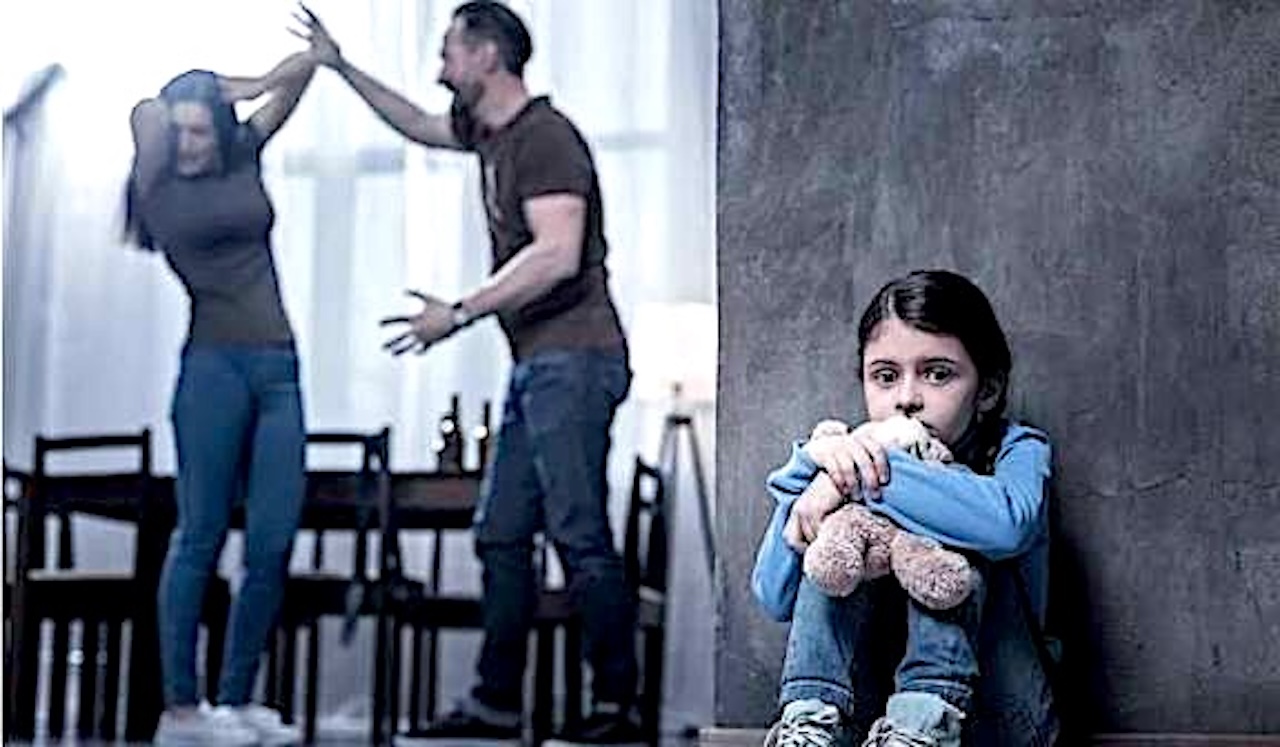
It is at this point that gender-based violence directly intersects with children’s exposure to domestic violence.

The original text identifies an essential point when it states that, in intrafamilial violence, “not only the woman is a victim, but also the children, directly or indirectly”. This observation is reflected in the definition developed by CISMAI, according to which children’s exposure to intrafamilial violence includes the experience by a child or adolescent of abuse carried out through physical, verbal, psychological, sexual, economic or stalking behaviour against a reference figure or someone emotionally significant to them.

Children may experience such violence directly, when it occurs within their perceptual field; indirectly, when they become aware of it; or through perceiving the physical and psychological consequences produced by the violence.

This means that a child does not necessarily have to see an assault in order to become a victim of it.

A child may hear shouting from another room, see the aftermath of an assault, perceive the mother’s fear, witness the arrival of law-enforcement officers, experience sudden removal from the home, or become involved in strategies through which one parent controls, threatens or persecutes the other.

Violence thus becomes part of the child’s everyday experience even when it leaves no physical mark on the child.

Can a violent partner nevertheless be considered a “good father”?

One of the most persistent stereotypes is expressed in a phrase that continues to recur in family disputes: “He may be a bad husband or partner, but he is a good father.” The original text challenges this conceptual separation particularly forcefully.

The issue is not to claim automatically that any violent conduct towards a partner must produce a predetermined consequence for parental responsibility, which must always be assessed by the court in the individual case. It does mean, however, recognising that violence exercised within the family environment cannot be regarded as irrelevant to children’s wellbeing.

A child living in an environment characterised by violence may be forced to confront relational models in which strength and domination are associated with power, while fear and submission are associated with weakness. The child may experience fear, guilt, anger and ambivalence, and may even develop processes of identification with the perpetrator.

It is for this reason that CISMAI stresses that children exposed to domestic violence cannot be regarded merely as spectators of something that concerns adults alone.

Coordination between criminal and family proceedings

The complexity becomes particularly evident when domestic violence gives rise simultaneously to criminal proceedings and family proceedings.

Italy’s so-called Red Code legislation strengthened the circulation of information between judicial authorities, and the current Article 64-bis of the Implementing Provisions of the Code of Criminal Procedure provides, in the circumstances covered by the provision, that the public prosecutor must ascertain whether family proceedings are pending and transmit without delay to the competent court the documents specified by the legislation, except those covered by secrecy.

The need for coordination arises from a practical difficulty: in the early stages of family proceedings, the court is unlikely to have a final criminal judgment available. It may instead have before it records of summary information, precautionary orders, expert reports, investigative materials admissible within the limits established by law, applications for committal to trial, or non-final decisions.

The original text correctly identifies this difficulty precisely in relation to the need to adopt urgent measures concerning custody and the exercise of parental responsibility.

The civil court is not required automatically to import into its own proceedings the conclusions reached in criminal proceedings, but it must be able to know the relevant elements and assess them independently according to the rules of civil procedure and in the interests of the victim and the child.

The Cartabia Reform and the special procedure for cases involving violence

The reform of civil procedure introduced a particularly significant development by establishing, within Title IV-bis of Book II of the Code of Civil Procedure, a specific section devoted to domestic or gender-based violence.

Articles 473-bis.40–46 of the Code of Civil Procedure govern proceedings in which family abuse or domestic or gender-based violence committed by one party against the other or against minor children is alleged.

The legislation allows the judge to shorten time limits and to carry out without delay, including of the court’s own motion, the activities provided for in the relevant section. It also requires the court to protect the victim’s personal sphere, dignity and safety, including, where appropriate, by avoiding the simultaneous presence of the parties.

Under specified circumstances connected with the existence of proceedings or measures concerning abuse or violence, the order setting the hearing does not contain an invitation to seek family mediation.

These are not merely procedural details. They reflect recognition of a fundamental principle: violence cannot be treated as an ordinary relational crisis to be resolved through conciliation.

Preventing secondary victimisation

Procedural coordination must be accompanied by another fundamental requirement: ensuring that the operation of institutions does not itself cause secondary victimisation.

A person who has experienced violence may be required to recount the same episodes repeatedly, confront the perpetrator on several occasions, feel disbelieved, or endure proceedings in which reported violence is gradually reframed as generic “couple conflict”. The original text correctly associates secondary victimisation with the suffering that may arise after reporting the abuse and throughout judicial proceedings.

The special provisions introduced into the Code of Civil Procedure should also be read from this perspective: expedited proceedings, the court’s investigative powers, protection of the victim, caution regarding the simultaneous presence of the parties and the specific treatment of mediation all seek to prevent instruments ordinarily designed for managing family conflict from becoming, in cases involving violence, a new source of pressure on the victim.

Protecting children means interrupting the transmission of violence

Children’s exposure to domestic violence demonstrates that prevention cannot be limited to bringing a particular episode of violence to an end.

A child growing up in an environment in which domination constitutes an ordinary form of relationship may internalise distorted representations of intimate relationships, develop fear and guilt, or find themselves psychologically compelled to give meaning to the behaviour of the adults on whom they depend.

The original text specifically describes the risk that a child may oscillate between avoiding the violent adult and identifying with them, sometimes even attributing to themselves responsibility that belongs exclusively to adults. This is an important point to retain, while avoiding the error of turning possible psychological responses into automatic or universal consequences.

For this reason, educational work forms part of primary prevention. Teaching children and adolescents to recognise emotions, respect the autonomy of others and distinguish love from possession means intervening before particular relational models become normalised.

Recognising violence before it is too late

Responding to violence is not simple, particularly where there is emotional involvement, economic dependence, the presence of children or fear of the consequences.

Seeking help may require a long and difficult process, and precisely for this reason institutional responses should never be limited to waiting until the victim, alone, finds the strength necessary to leave the relationship.

Signals must be recognised; victims must be listened to without judgement; risk must be assessed; victims and children must be protected; and effective coordination must be established among civil and criminal justice, law-enforcement agencies, lawyers, social services and healthcare professionals.

The conclusion of the original paper retains all its force in this respect: learning to ask for help, recognising the problem and rebuilding self-esteem and the capacity for self-protection are necessary steps, because the most tragic outcomes of violence may come only after months or years of suffering.

But responsibility cannot rest solely on the victim.

A society capable of tackling violence is one that recognises it before it becomes irreparable and understands that protecting a woman from violence very often means protecting her children at the same time.

Essential legal and bibliographical references

Council of Europe (2011), Convention on Preventing and Combating Violence against Women and Domestic Violence, Istanbul, 11 May 2011, ratified by Italy through Law No. 77 of 27 June 2013.

CISMAI (2017), Minimum Requirements for Interventions in Cases of Children Exposed to Violence against Their Mothers, Italian Coordination of Services against Child Maltreatment and Abuse. The document structures intervention around the stages of identification, protection, assessment and treatment.

Italy, Law No. 69 of 19 July 2019, Amendments to the Criminal Code, the Code of Criminal Procedure and Other Provisions Concerning the Protection of Victims of Domestic and Gender-Based Violence (the so-called Red Code).

Italy, Legislative Decree No. 149 of 10 October 2022, implementing the reform of civil procedure, with particular reference to Articles 473-bis.40–46 of the Code of Civil Procedure concerning proceedings in which family abuse or domestic or gender-based violence is alleged.

Article 64-bis of the Implementing Provisions of the Code of Criminal Procedure, Communications and Transmission of Documents to Other Judicial Authorities, in the version currently in force.

CISMAI, documentation and guidelines on children’s exposure to domestic violence, with particular reference to direct and indirect exposure and to the perception of the consequences of violence.


OTHER CONTRIBUTIONS BY THE SAME AUTHOR

Gender-based Violence and Economic Abuse

Five latest contributions on gender discrimination and violence

When Possession Is Mistaken for Love

The Silent Fall: Why Anna Democrito and the Others Were Not Seen in Time

The Brain Held Hostage: the Neurochemical Hijacking of Domestic Violence

As If She Had Taken Away a Child’s Pacifier

A Historic Turning Point: Law 181/2025 Recognizes the Specific Nature of Femicide

Five latest contributions

Who Decides When a Woman Is Free?

International Week of Deaf People: From Accessibility to Full Citizenship

Emma Bonino: Freedom Against the Morality Imposed by Others

Being Prepared

From Rights to Practice: When the Community Takes Responsibility for the Future


Ethica Societas is a free, non-profit news publication published by a non-profit social cooperative
Copyright Ethica Societas, Human&Social Science Review © 2026 by Ethica Societas UPLI onlus.
ISSN 2785-602X. Licensed under CC BY-NC 4.0

Related posts

Evolution of Military Spending in Italy

Francesco Mancini

Organized Crime, Social Distress and Low-cost Drug Markets

Massimiliano Mancini

Selective Ecology

Oreste Patrone